
ISO 22000:2018 certification is one of the important international standards in the field of food safety and supply chain management. Here are some things you should know about this certification. Read this article by Baby Boss!
What is the ISO 22000 standard?

The ISO 22000 standard is a set of international standards issued by the International Organization for Standardization (ISO), developed particularly based on the recommendations of the Codex Commission, an organisation specialising in food safety established by the Food and Agriculture Organization of the United Nations (FAO) and the World Health Organization (WHO) in 1963. This standard was first launched in 2005 to provide a globally recognised food safety management system (FSMS) framework.
The latest version of ISO 22000, the 2018 version, was published in 2018. This was an important update that introduced new requirements and guidance to improve the performance and effectiveness of food safety management systems.
The ISO 22000 standard sets out requirements for establishing, implementing and maintaining an effective food safety management system, including aspects such as hazard identification, hazard management and the establishment of critical control points. The ultimate goal of ISO 22000 is to ensure the safety and suitability of food from production through to final consumption, helping to protect consumers’ health.
What standards does ISO 22000 include?

The ISO 22000 family of standards includes a range of core standards designed to support organisations in managing food safety and ensuring the conformity of food products throughout the supply chain. The following are the standards in the ISO 22000 family:
-
ISO 22000:2018: This is the main standard for food safety management systems, applicable to all organisations in the food supply chain. It sets out requirements for establishing, implementing and maintaining an effective food safety management system.
-
ISO 22001: Guidance on applying ISO 22000, with requirements similar to those of ISO 9001, focusing on establishing and maintaining a quality management system.
-
ISO/TS 22002-1 to ISO/TS 22002-4: These standards provide food safety prerequisite programmes for specific types of activities in the food supply chain, including production, catering, farming and food packaging.
-
ISO/TS 22003 and ISO/TS 22004: These provide guidance and guidance on applying ISO 22000, offering detailed instructions on how to implement and maintain a food safety management system.
-
ISO 22005: This standard focuses on traceability in the food supply chain, ensuring the ability to identify and track the origin of food ingredients.
-
ISO 22006: Guidance on applying ISO 9002:2000 to crop production, creating a quality management system for crop production.
The ISO 22000 standard is not only an international standard for food safety but also an important tool for ensuring the safety and conformity of food throughout the global supply chain. The transition from HACCP systems to ISO 22000 is becoming an important trend among organisations in Vietnam, helping to improve food safety management and meet international requirements.
Benefits of the ISO 22000:2018 standard
Applying the ISO 22000:2018 standard plays an important role in ensuring food safety and improving the operational efficiency of businesses. Here are some reasons why this standard should be applied:
-
Establishing a food safety management system: The ISO 22000 standard establishes a food safety management system for businesses, helping to ensure that food production and supply processes comply with safety standards.
-
Improving product quality: Applying ISO 22000 helps businesses improve their ability to supply safe food that meets customer requirements, thereby strengthening customer trust and satisfaction.
-
Addressing food safety hazards: This standard provides the basis and principles for addressing hazards that could compromise food safety, thereby minimising risks related to consumers’ health.
-
Reducing costs and risks: Applying ISO 22000 helps reduce the costs of fines, compensation or product recalls resulting from breaches of food safety regulations.
-
Building trust and reputation: ISO 22000 certification is evidence that a business complies with food safety standards, thereby building trust and reputation in the eyes of customers and business partners.
-
Promoting growth and revenue: Complying with food safety standards not only helps businesses avoid risks related to consumers’ health but also promotes business growth, increases revenue and expands production capacity.
Who the ISO 22000:2018 standard applies to

ISO 22000:2018 is a comprehensive set of standards that applies to all parties directly and indirectly involved in the food supply chain. Regardless of their size or geographical location, all organisations involved in the food industry can apply this standard to ensure food safety and quality. Below are some types of businesses that can apply ISO 22000:
-
Food production businesses: Includes food processing plants, beverage production plants, canning factories, frozen food production plants and other food production facilities. For these businesses, complying with this standard is essential to ensuring product safety and quality.
-
Food transport and storage companies: Food transport companies and storage warehouses also need to apply ISO 22000 to ensure product safety and quality during transport and storage.
-
Restaurants and catering services: Restaurants, hotels, eateries, cafés and other catering services should also apply this standard to ensure that food is prepared and served safely to customers.
-
Food retailers: Supermarkets, grocery stores, food retailers and other retail outlets that supply food products to consumers should also comply with this standard.
-
Organisations involved in the food industry: Includes research organisations, food testing laboratories, food regulatory authorities and organisations involved in food safety. All of them need to apply ISO 22000 to ensure safety and quality standards in the food industry.
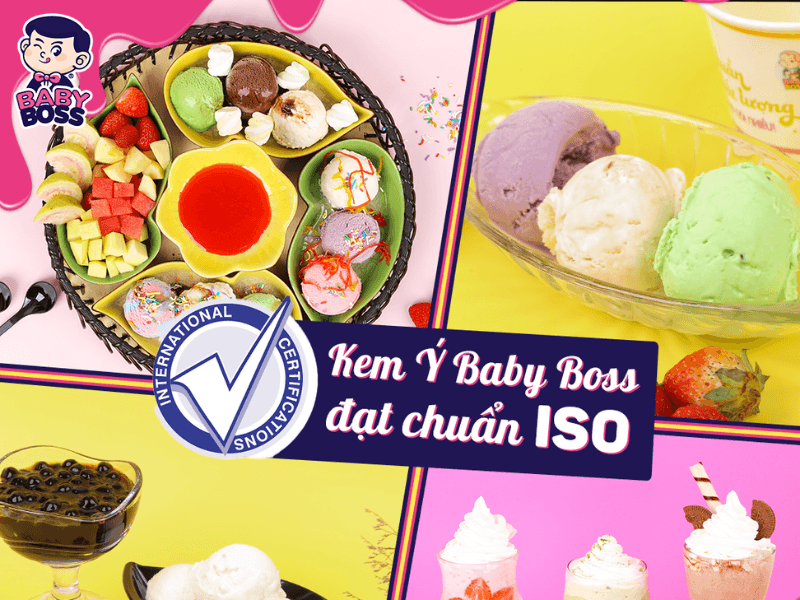
Baby Boss Gelato has achieved ISO 22000:2018 certification

Gelato ice cream Baby Boss is proud to announce that we have achieved ISO 22000:2018 certification for our food safety management system. This is an important step in our commitment to ensuring the quality and safety of the products that reach our customers.
ISO 22000:2018 is an international standard for food safety management systems, developed to ensure that all food production, processing and distribution processes comply with the highest safety and quality standards. With this certification, Baby Boss Gelato is committed to complying with the strictest standards throughout the ice cream production process. Gelato.
We have invested significantly in improving our production processes, ensuring that ingredients are carefully selected and comply with food safety standards. Achieving ISO 22000:2018 certification demonstrates our ongoing efforts to provide customers with the highest-quality and safest Gelato products.
When choosing Gelato at Baby Boss, customers can enjoy the unique and delicious flavour of Gelato, produced under strict supervision and control in accordance with the international ISO 22000:2018 standard.
Hotline: 1900 99 88 80
Website: babyboss.com.vn
Tiktok
Instagram
Thread
Youtube
Linkin
Zalo OA
Comments