
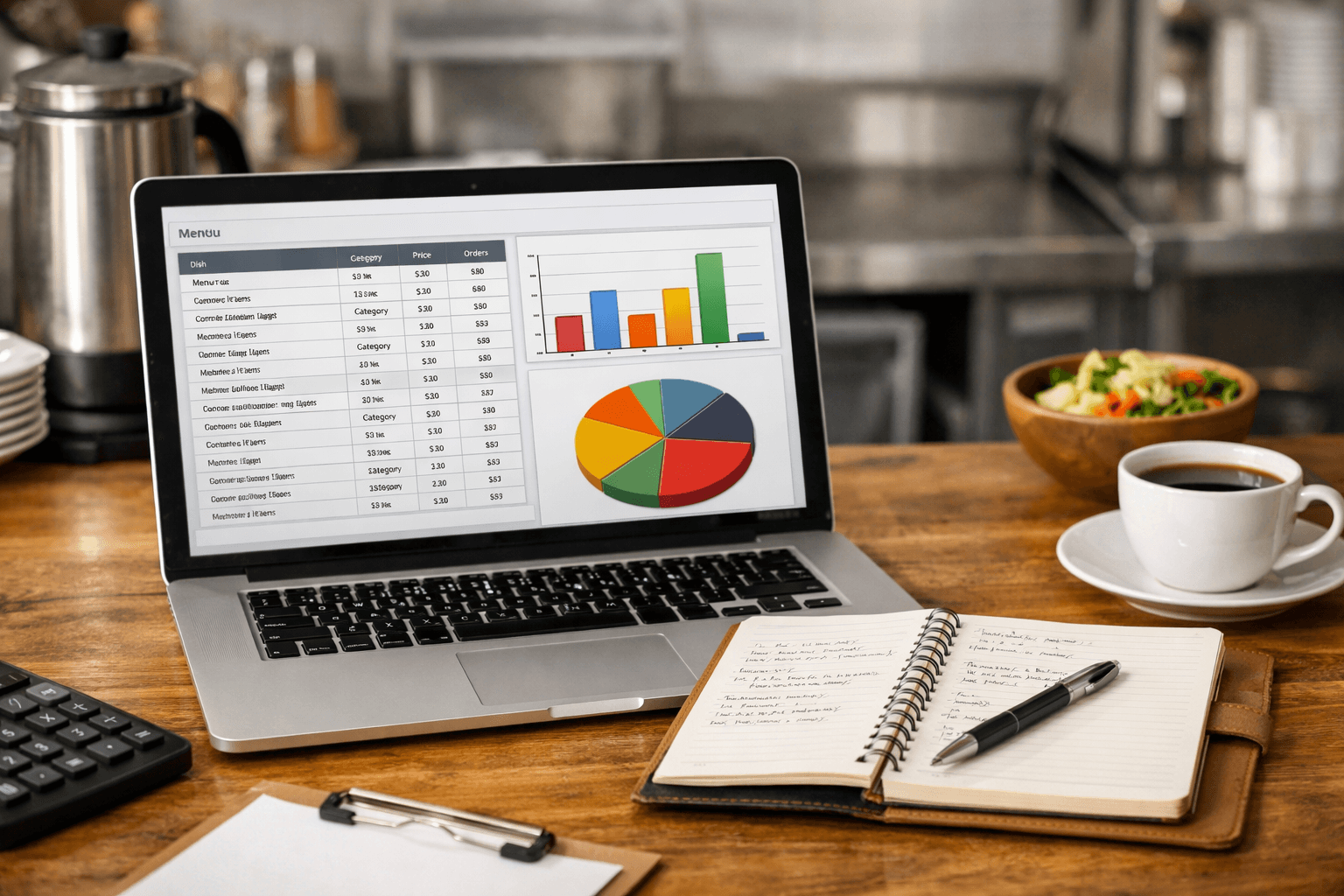
AI in F&B is moving beyond the showcase
AI in F&B is increasingly being viewed in more practical terms: helping industry professionals make decisions rather than simply creating a technology showcase. At the Future Menus 2026 event, artificial intelligence was incorporated into the process of developing and operating menus, with the aim of narrowing the gap between creative inspiration and practical implementation.
According to information from Future Menus 2026, this tool is applied to the same challenges that restaurants, cafés and ice cream brands deal with every day: understanding customers, controlling costs, adapting to trends and turning ideas into activities that can be operated in practice.
What matters is not the number of dish ideas AI can generate, but how well each idea fits the customers, ingredients, staff and business model.
Operational pressures make data an important input
The F&B industry is facing simultaneous pressure from ingredient, staffing and operating costs, as well as the speed at which the market is changing. The Vietnam F&B Market Report 2025 recorded a slowdown in the industry’s expansion, while businesses still need to control costs and maintain genuine value for customers.
The Horeca School report was produced using data from F&B businesses, in-depth interviews and surveys of restaurant and café owners. The document also states that AI is being used to collect and analyse market data. This shows that AI is not only appearing in marketing, but is also being incorporated into the process of reading and processing information.
For operators, data may come from revenue, sales volumes by time period, customer feedback, cancellation rates or ingredient consumption. However, AI can only provide effective support when the input data is sufficiently clear and users have identified the business question that needs answering.
Which decisions can AI support in F&B?
From dish inspiration to an implementable menu
AI can support the early stages of menu development by suggesting combination directions, grouping needs or organising information from multiple sources. Even so, the final idea still needs to be checked by chefs and operators against specific criteria:

- Whether the target customers are genuinely suited to the new dish.
- Whether the ingredients can be sourced consistently and with consistent quality.
- Whether the team has the skills, equipment and time to prepare it.
- Whether the dish is suitable for the shop’s price point, setting and positioning.
For an ice cream brand, the process may begin by understanding customer demand, then comparing it with the product range and service capacity. Businesses can refer to Baby Boss Gelato products or Gelato knowledge to connect product ideas with specialist information and a suitable business model.
Reading feedback and identifying recurring issues
In F&B community discussions, many restaurant owners are interested in repetitive tasks such as responding to reviews, handling messages, taking bookings and summarising customer feedback. AI can help categorise information or suggest ways to respond, but messages sent to customers still need to be checked by people.
This approach is useful when feedback comes from multiple channels. Rather than reading each comment in isolation, managers can use a tool to group commonly occurring topics and then identify the issues that should be prioritised for improvement.
Supporting stock control and purchasing plans
Stock control, purchasing and demand forecasting are often areas where the operational value is clear. AI can help detect trends in sales data or provide suggestions for review, but it should not make decisions on behalf of the operations team.
This is especially important for food, where the final decision also involves quality, storage conditions, suppliers and safety requirements. According to the FAO, scientific advice from FAO and WHO provides a foundation for developing international food safety standards, guidelines and codes.
From AI tools to decision-making processes
F&B businesses do not necessarily need to start with a large system. A more cautious approach is to choose a measurable issue, such as summarising customer feedback or analysing sales by product group. The business can then assess whether the AI tool helps reduce the time required or improve the quality of decisions.
| Challenge | AI can support | People still need to decide |
|---|---|---|
| Developing new dishes | Suggesting combination directions and summarising demand data | Flavour, quality, selling price and ability to serve |
| Customer feedback | Categorising topics and drafting suggested replies | Tone of voice, context and how to handle each case |
| Stock control | Identifying consumption trends from available data | Checking quality, supply and storage conditions |
| Menu operations | Comparing sales data with the dish range | Deciding whether to retain, adjust or discontinue a dish |
People who are opening a new shop often ask which tool they should invest in first. The more practical answer is to start with the data already available, identify a specific bottleneck and establish evaluation criteria before rolling it out more widely.

Limitations that cannot be overlooked
AI can process information quickly, but it does not automatically understand the full context of a shop. Incomplete, inaccurate or outdated data can lead to unsuitable suggestions. Even a clear analysis cannot replace tasting, checking ingredients and observing customers’ real-world reactions.
For decisions relating to food safety, AI is even less able to serve as the final approval authority. FAO and WHO emphasise the role of scientific advice, risk assessment and food control systems. Businesses should therefore cross-check information against relevant regulations, standards and suitably qualified professionals. International food safety standards developed by the Codex Alimentarius Commission are also an important reference source in this field, according to information from WHO.
Implementation perspective: AI should be viewed as a layer that supports analysis and information organisation, not as a replacement for the chef, shop manager or quality control team.
Where should restaurants and ice cream brands start?
For a small shop, the first step could be to standardise how revenue, feedback, sales volumes and ingredient status are recorded. Once the data is structured, it becomes easier for the business to assess which AI tool genuinely helps save time or clarify a decision.
An ice cream brand building its business model can combine data analysis with product training, preparation processes and shop model design. Content such as F&B business guidance and Gelato ice cream setup consultancy can serve as reference points for placing technology within the right process, rather than adopting it simply because it is a trend.
AI in F&B is therefore moving from a story designed to attract attention to a question of effectiveness: does the tool help the business understand customers better, make decisions faster and operate more consistently? The answer depends on the data, processes and control capabilities of each business model.
Partner with Baby Boss
Explore products and Baby Boss services, or call 1900998880.
Shopee · TikTok · Instagram · Threads · YouTube · LinkedIn · Zalo OA · Pinterest
Comments