
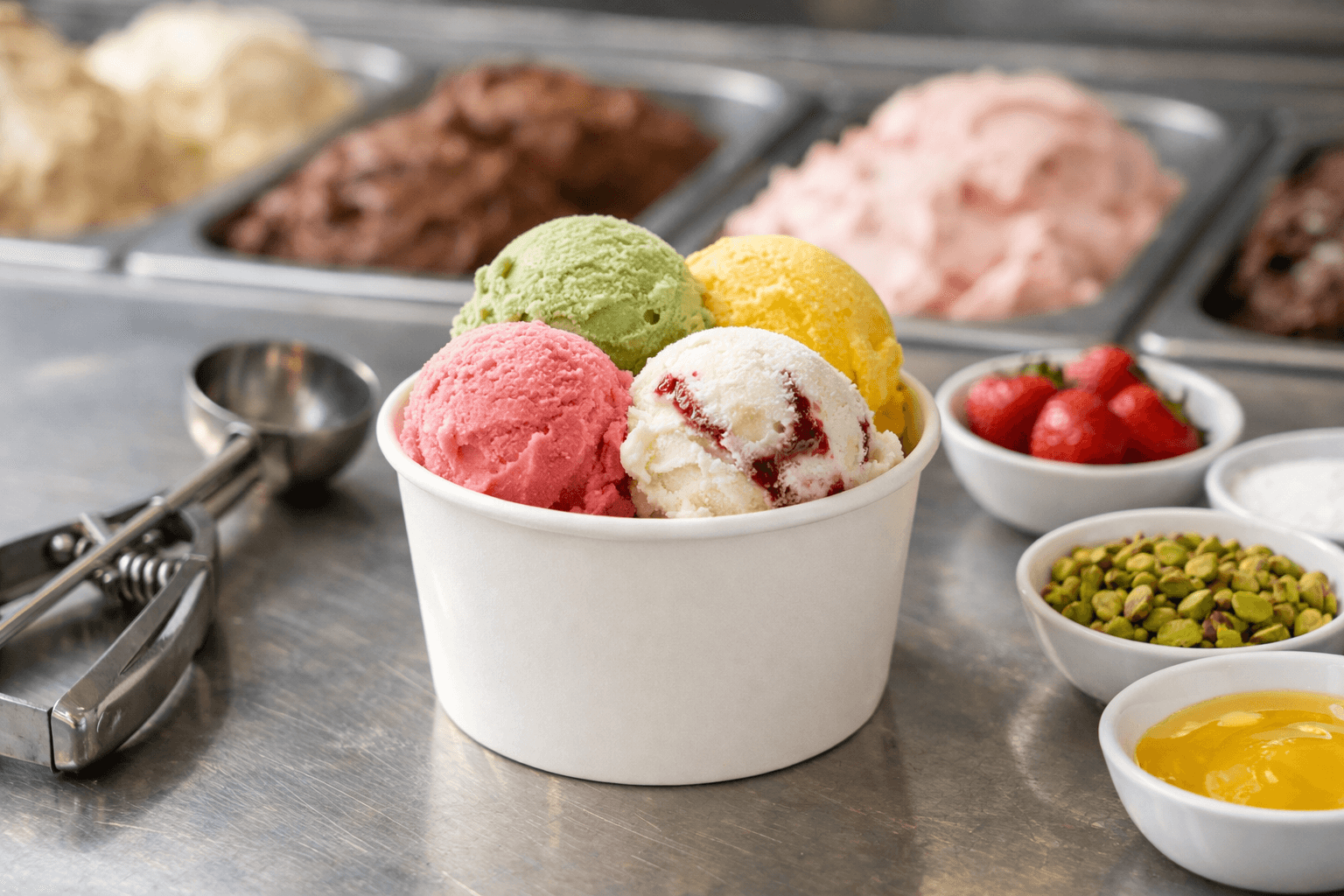
The 2025 F&B market report shows that the game is shifting from recovery-driven growth to a more stable and slower phase. For ice cream brands, this signals the need to reassess product value, customer experience and operational capability before expanding their sales outlets.
The 2025 F&B market report is presented as a study of the industry’s position, opportunities and challenges during the recovery period.
The 2025 F&B landscape: slower growth and a defensive mindset
Slower growth does not necessarily signal that demand for food and drink has disappeared. It suggests that businesses may need to be more cautious when deciding whether to open a new outlet, invest in premises or expand their product range. For ice cream and dessert brands, the important question is not only “where should we open next?”, but also “what value is the current outlet creating for customers?”.
Slower growth does not mean opportunities have disappeared
As the pace of expansion across the industry slows, brands with clear positioning can still find their own space. An ice cream shop can compete through products that meet customer needs, a memorable experience and consistent operations, rather than trying to be present in as many locations as possible.
People who are new to opening a shop often ask whether simply choosing a product currently attracting attention can bring in customers over the long term. From an operational perspective, a new product may create curiosity, but the likelihood of customers returning also depends on their overall perception of quality, price and the in-store experience.
Why do ice cream brands need to reassess their expansion strategy?
A notable point in the 2025 F&B market report is that diners are described as shifting towards a more defensive and pessimistic mindset when looking ahead to 2026. As budgets come under closer scrutiny, an ice cream product needs to be more than simply “tasty” in a general sense: it needs to make customers understand clearly what they are receiving in return for their spending.
For gelato brands, this calls for a balance between image, product quality and the reasonableness of the purchasing experience. An overly broad menu, complex processes or a model dependent on continuous promotions can increase operational pressure if not properly controlled.

Three questions to ask before investing in additional outlets
- Are customers choosing the product for its flavour, experience, convenience or a specific occasion?
- Are the current outlet’s processes consistent enough to be replicated?
- Is the brand creating real value, or does it rely solely on advertising and promotions to attract visits?
These questions help shop owners shift their focus from the speed of expansion to the quality of their foundations. This is also a necessary preparation step before considering Gelato ice cream setup consultancy or a long-term partnership model.
Three practical priorities for an ice cream brand
1. Clarify the real value of every product
The report suggests that competition will become fiercer, with businesses needing to retain customers through real value and a quality experience rather than simply expanding their scale. For an ice cream brand, “real value” can be expressed through perceived quality, suitable portions, clear flavour choices and consistent service.
This does not mean that every brand must pursue the premium segment. More importantly, the product promise must match the price and be communicated consistently across the menu, counter and experience after the customer has made a purchase.
2. Design an experience that gives customers a reason to return
Experience is not just about decorating the shop. For an ice cream brand, it could include how easily customers can choose a flavour, how the product is presented, the convenience of takeaway purchases or a product range suited to different occasions.
In F&B communities, many shop owners regularly discuss retaining customers after their first purchase. These discussions often highlight the role of service quality, the local community and appropriate marketing activities; this is a community perspective, not data verified in the report.
3. Control operations before scaling up
When both costs and spending power need to be considered, operations become part of the brand experience. Preparation, storage, service, stocktaking and staff training processes need to be clear enough to limit inconsistencies between shifts or outlets.

Shop owners can start by reviewing slow-selling products, steps that slow down service and expenses that are not creating clear value. For product options, they can also refer to the Gelato Baby Boss product range to envisage how to build a range suited to a specific business model.
Insights for ice cream shop owners and gelato brands
The main message of the 2025 F&B market report is not a reason for a brand to stop expanding. Rather, expansion should follow evidence that the current model has the right customers, delivers a consistent experience and is supported by sufficiently controlled processes.
| Common old priorities | A more cautious approach |
|---|---|
| Open more outlets to increase reach | Assess the performance and replicability of existing outlets |
| Chase products currently attracting attention | Choose products that fit the brand positioning and customer needs |
| Use promotions to drive purchases | Clarify the product’s value and build a reason for customers to return |
| Broaden the range as much as possible | Prioritise a range that is easy to operate, easy to train staff on and consistent |
This is also why owners should view brand-building as a long-term challenge, not merely a matter of revenue from one campaign to the next. Content about F&B business can support the process of reviewing the model, while information about Gelato knowledge gives teams a stronger foundation for product development.
Conclusion: selective growth instead of chasing volume
2025 F&B Market Report suggests a shift in how we view growth: scale still matters, but it cannot replace real value, a quality experience and operational capability. For an ice cream brand, this period may be the right time to strengthen core products, standardise the customer experience and gain a clearer understanding of why customers return.
A brand with a strong foundation will have more options when the market recovers. Before deciding to expand, check whether the current model is sufficiently clear, consistent and suited to the budget of its target customers.
Partner with Baby Boss
Explore products and Baby Boss services, or call 1900998880.
Shopee · TikTok · Instagram · Threads · YouTube · LinkedIn · Zalo OA · Pinterest
Comments