
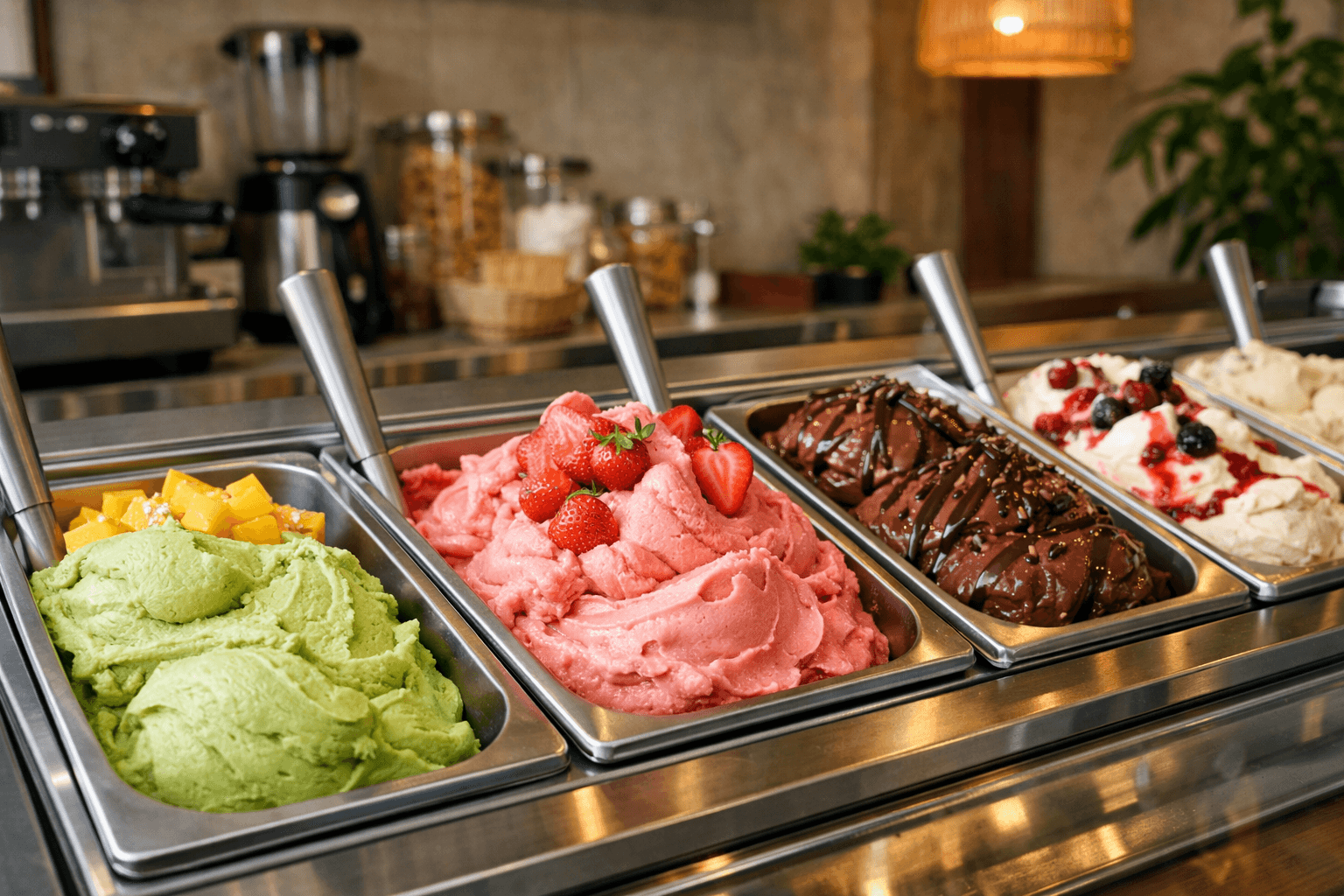
The purchasing power picture in the first six months of 2026
Data for the first six months of 2026 shows that Vietnam's gelato market in 2026 is operating in a relatively positive consumer environment, although there are no separate figures for the gelato industry. Total retail sales of goods and consumer service revenue are estimated at 3.888 trillion dong, up 12.89% compared with the same period in 2025. After excluding the price factor, real growth reached 7.2%.
Real growth is a sign that overall purchasing power still has a certain degree of resilience. However, these figures cover the entire retail and consumer services market, not gelato revenue or the dessert industry alone. Therefore, the 7.2% rate cannot yet be used to conclude that Vietnam's gelato market in 2026 also grew at the same rate.
The above information was published against a backdrop of volatility in international commodity markets, including uncertainties related to military conflicts and oil prices. Nevertheless, the report stated that the domestic commodity market remained relatively stable in the first half of the year. Figures from the Ministry of Industry and Trade provide a basis for understanding the broader context, rather than serving as a direct indicator for each gelato brand.
What pressures are food service costs facing?
Average consumer prices in the first six months of 2026 rose by 4.38% compared with the same period a year earlier. This remains within the inflation-control target of below 4.5% stated in the report, but also shows that the overall cost level is not standing still.
Among the main consumer groups, the food service group rose by 5.04%. This is a notable indicator for gelato-selling models because operating costs, selling prices, customer traffic and profit margins are usually closely connected to consumer purchasing power.
The transport group rose by 9.57%, while housing, electricity and water, fuel and construction materials rose by 7.77%. These figures do not show how much the costs of a particular gelato shop have increased, but they help business owners identify pressures that may spread to transport, premises, refrigeration and related operating expenses.
Does rising purchasing power mean that gelato will sell better?
This question should not be answered using total retail sales figures alone. Gelato belongs to a specific consumer segment, while the report combines many different groups of goods and services. Rising purchasing power across the market provides a favourable foundation, but the extent to which each industry benefits still depends on the shop's location, selling prices, products and how customers allocate their budgets.

People new to the F&B business often focus on a more practical question: customers are still spending, but are they willing to buy desserts as frequently as before? Based on the data currently available, it can be said that overall consumer demand has been maintained; there is no basis in the accepted sources for quantifying demand for gelato.
Therefore, rather than rushing to expand based on a single macroeconomic growth rate, shop owners can monitor signals closer to the point of sale: customer visits, bill value, the repeat-customer rate and the performance of each product group. These internal indicators do not replace market data, but they help determine whether the shop is genuinely benefiting from overall purchasing power.
Which signals should the gelato industry monitor?
Selling prices and customer sensitivity
When the food service group rises in price by 5.04%, any adjustment to selling prices should be considered alongside the customer experience and serving size. A higher price may protect profit margins, but it may also change the purchasing frequency of customers who are sensitive to spending.
Rather than looking only at revenue, shops should consider revenue alongside the number of orders and the average value per order. This approach helps distinguish growth driven by more customers from growth driven only by price increases.
Operating costs and refrigeration equipment
Fluctuations in transport, housing, fuel and construction materials are not a detailed price list for gelato shops. Even so, they are a reminder to review costs that are often overlooked, such as transport, refrigeration, maintenance and premises expenses.
For businesses considering expansion, preparing several cost scenarios is more prudent than an estimate based solely on current prices. Business owners can also refer to the F&B Business Guide to organise questions about operations and cash flow.

Product mix and purchasing occasions
Macroeconomic figures do not show which flavours, formats or occasions are currently preferred. Therefore, the product range should be assessed using sales data from the shop, rather than assuming that the entire gelato segment is growing at the same rate.
For shops that need to review their foundational product knowledge, they can also see Gelato Knowledge. This is supplementary to operations, not evidence of the market's size or growth rate.
Three things that should not be inferred from the six-month figures
- Do not equate retail growth with gelato growth: the overall figures include many industries and services and do not separate gelato.
- Do not treat CPI as the cost increase for every shop: CPI reflects the average price level, while actual costs depend on each business's model, location and contracts.
- Do not conclude that purchasing power will remain unchanged throughout the year: the available sources only reflect the first six months of 2026, so the following months need to be updated separately.
What can gelato businesses prepare?
- Compare revenue, order volumes and average order values month by month to identify the actual drivers of growth.
- Review costs that are sensitive to fuel prices, transport, refrigeration and premises.
- Check the performance of each product group before adding equipment, opening a new outlet or expanding the range.
- Develop pricing and production plans for a scenario in which purchasing power grows more slowly than expected.
- Gather more specialised data on the dessert industry, customer behaviour and internal business performance before making major decisions.
Those researching product business models can view Baby Boss Gelato products as a reference point during the range research process. The choice of products, equipment or partnership model should still be based on each shop's specific needs and operational considerations.
A cautious conclusion for the Vietnamese gelato market in 2026
In the first six months of 2026, total retail sales and consumer service revenue in Vietnam increased by 12.89%, while real growth after excluding the impact of prices reached 7.2%. At the same time, food and beverage services grew by 5.04% and average CPI increased by 4.38%.
This picture shows that overall purchasing power is being maintained, but costs are also putting pressure on business operations. For the Vietnamese gelato market in 2026, the most appropriate way to read these figures is as baseline signals to monitor, rather than evidence that gelato sales have increased at the same rate.
In subsequent decisions, point-of-sale data, the ability to control costs and customers' actual responses will be no less important than macroeconomic indicators.
References
Alongside Baby Boss
Explore products and Baby Boss services, or call 1900998880.
Shopee · TikTok · Instagram · Threads · YouTube · LinkedIn · Zalo OA · Pinterest
Comments