Why do newcomers need a food safety checklist when preparing drinks?
When they are new to preparing cold drinks, many people tend to focus on the recipe, speed and presentation. However, food safety when preparing drinks also requires checkpoints to be reviewed before ingredients move through each stage of the process.
This checklist is for newcomers working at a cold drinks counter, in the context of preparing and serving drinks at a business establishment. Its aim is to help drink preparers know what to check before, during and after each task, rather than making their own assumptions about quantities or storage periods.
WHO introduced the “Five Keys to Safer Food” framework to educate consumers and food handlers about safe food-handling practices. It is a simple framework for reference; you can also read WHO’s Five Keys to Safer Food document. This article adapts that framework into an editorial checklist for cold drinks counters; it does not replace local regulations or professional procedures.
Important note: the accepted excerpts in the source currently do not list the names and detailed content of all five keys. Therefore, the five sections below are practical checkpoints to make it easier for newcomers to review their work, and should not be regarded as a verbatim copy or an official interpretation of WHO guidance.
Key 1: Identify the right checkpoints when preparing drinks
Before starting, write down the points that a batch of cold drinks will pass through: ingredients, equipment, the person carrying out the task, the preparation area and the serving step. This approach helps you see the entire food safety process when preparing drinks, rather than focusing only on the final few seconds of preparation.
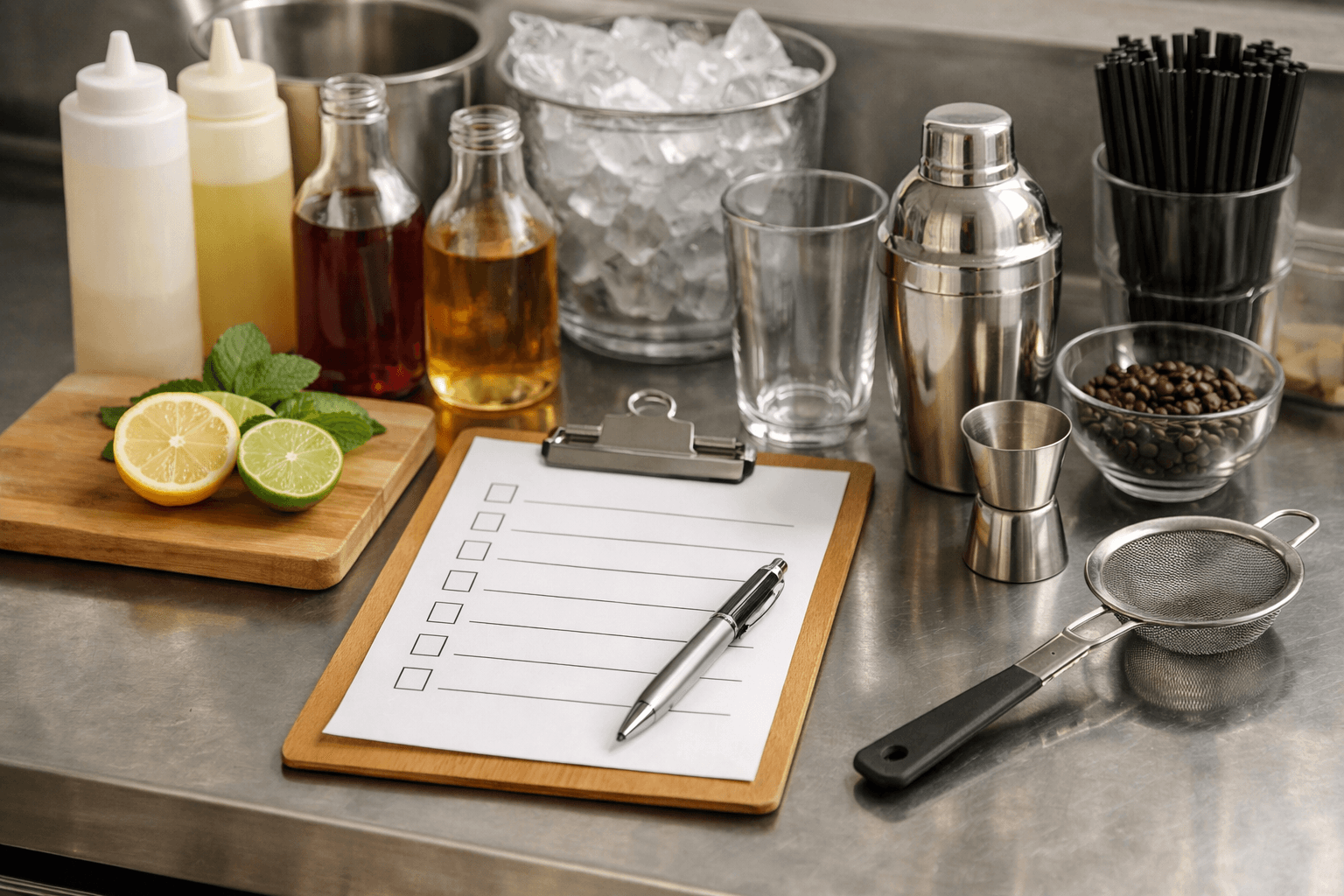
A short checklist placed beside the work area can help turn the question “what needs to be checked first?” into a sequential habit, rather than relying entirely on memory. This is the foundation for building a more consistent cold drinks preparation process.
- Where does this process start, and at which step does it end?
- Which points need to be checked before moving on to the next step?
- Who is responsible for reviewing the process when several people are preparing drinks together?
WHO emphasises that food safety is a shared responsibility, with both consumers and food handlers playing a role in preventing foodborne illness. Therefore, the checklist should be used as a shared tool at the counter, not merely as a personal note.
Key 2: Control preparation procedures before mixing
The second checkpoint takes place before you put ingredients into the cup or machine. Review the work area, equipment and preparation sequence in line with the establishment’s internal procedures. If there are hygiene instructions for drink preparation or specific standards, place them beside the checklist for reference.

A word-of-mouth tip should not be used in place of an approved procedure. In particular, this article does not provide its own quantities of cleaning agents, contact times, temperatures or microbiological standards, because this information is not included in the accepted source.
Three questions to ask before starting
- Is the work area ready in accordance with the establishment’s procedures?
- Has the required equipment been checked according to the internal guidelines?
- Does the drink preparer know which step requires a pause for checking?
This is an operational checkpoint, not a safety formula that applies identically to every establishment. If there is no internal procedure, discuss the matter with the person responsible for professional standards or the relevant authority instead of setting your own figures.
Key 3: Keep the cold drinks preparation process consistent
Cold drinks often involve several consecutive steps: obtaining the ingredients, measuring them according to the establishment’s recipe, combining the components and finishing the drink. When serving a large number of customers, newcomers may skip a checking step because they want to work quickly; the checklist helps remind them of the sequence that needs to remain consistent.
Arrange the steps in the order currently used at the counter and clearly mark the points that must not be changed without authorisation. If the recipe, ingredients or equipment changes, update the internal guidelines rather than communicating the change only verbally.
How to use the checklist during a shift
- Quickly read through the entire sequence before starting the shift or before beginning a new group of items.
- Mark the steps that have been checked in accordance with the establishment’s requirements.
- Pause and ask the person responsible when you encounter a situation that is not covered by the guidelines.
- Record any inconvenient points so the process can be adjusted after the shift; do not simply skip them during service.
To reinforce your skills and task sequence, you can also explore the Drink Preparation Guidesection. All specific safety procedures still need to be checked against the establishment’s current guidance.
Key 4: Check before serving
Before handing the cold drink to the customer, carry out a final review. The aim of this step is to ensure that the item has followed the counter’s correct cold drinks preparation process and that there are no unusual points requiring the person responsible to review them.
- Was the drink made in accordance with the recipe and internal process sequence?
- Was any step skipped because the ingredients, equipment or person carrying out the task changed?
- If an unclear point is identified, should the item be put on hold while you ask the person responsible?
A checklist cannot replace professional judgement or local regulations. It simply helps turn the final check in cold beverage food safety into a visible, repeatable habit.

For counters using gelato products or specialist cold ingredients, see also Gelato Knowledge to distinguish product guidance from food safety requirements that need to be confirmed separately.
Checkpoint 5: Record and improve the process
A checklist is more valuable when it is used to learn from real shifts. After each error, ingredient change or question that arises, note which step was unclear and pass the question to the person responsible.
A personal experience should not be turned into a general claim for every counter. The Codex Alimentarius is a collection of standards, guidelines and codes of practice adopted by the Codex Alimentarius Commission to protect consumer health and support fair practices in food trade; these documents only have an effect when implemented. You can find more information at Codex Alimentarius to understand the role of standards and guidelines, but you still need to determine which documents apply where you operate.
Simple record template
| Situation | Question to record | Person to confirm with |
|---|---|---|
| Unclear operating step | How does the official procedure require it to be carried out? | Operations or technical lead |
| Ingredient or equipment change | Does the checklist need updating? | Process manager |
| An unusual point is identified | Is it necessary to pause and follow specific guidance for handling it? | Authorised person at the premises |
What not to guess about storage and food safety
The sources accepted for this article do not provide storage periods, storage temperatures, use-by times after opening or hygiene quantities. Therefore, do not take figures found online or shared through hearsay and apply them mechanically to cold beverages.
When a specific procedure needs to be established, use legal guidance, product documentation and procedures confirmed by a qualified professional. This is the section that needs editor review if the article is expanded into detailed operating guidance.
Five-checkpoint checklist to start today
- Identify the points that need checking throughout the entire food safety process when preparing beverages.
- Review the area, utensils and internal guidance before preparing cold beverages.
- Follow the correct sequence and do not skip steps when the counter is busy.
- Check again before serving.
- Record anything that is unclear and ask the responsible person to confirm it.
For newcomers, the most important thing is not memorising lots of tips, but knowing when to stop and check. If you are setting up a cold beverage counter, Baby Boss can support you through the Gelato ice cream setup consultation page for needs that require a separate discussion about the concept and equipment.
References
Partner with Baby Boss
Explore products and Baby Boss services, or call 1900998880.
Shopee · TikTok · Instagram · Threads · YouTube · LinkedIn · Zalo OA · Pinterest
Comments