
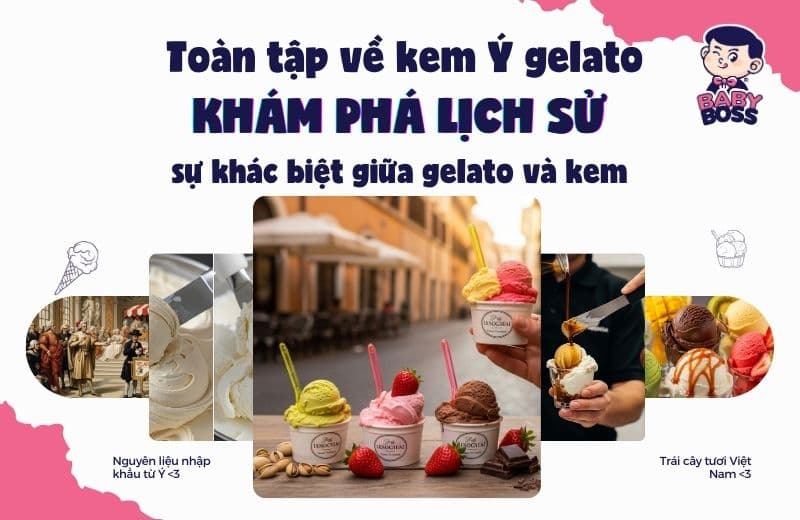
Gelato A–Z: The Complete Guide to Italian Gelato – Everything You Need to Know
Close your eyes and imagine: you are strolling along an ancient cobbled street in Rome, the sunset bathing everything in golden light, with a cup of cool, dense and creamy gelato in your hand, melting gently on your tongue with an astonishingly rich flavour. It is not simply "ice cream". It is gelato.
Many people still commonly call gelato "Italian-style ice cream", but that definition only scratches the surface of a culinary heritage that has endured for centuries. So, what is Italian gelato that it has captivated the world? Where did it come from? Why is its texture so unusually smooth and creamy? And why, once you have tasted authentic Italian gelato is it so difficult to go back to ordinary industrial ice cream?
This article is a complete guide, an A–Z journey that will unlock every secret behind one of Italy's most refined desserts. Join Baby Boss, with all its passion and expertise, as it guides you into the sweet and artistic world of Italian gelato.

Its History: Gelato's Sweet Journey from the Renaissance to the Modern Day
To fully understand Italian gelato, we need to turn back the clock and return to its origins. The journey of gelato is not just the story of a food; it also reflects the development of European culture and culinary art.
Early Origins – From Snow Mixed with Honey
The idea of frozen desserts dates back thousands of years. The ancient Egyptians, Romans and Persians knew how to enjoy snow gathered from high mountains, mixed with honey, fruit juice or various syrups. This can be regarded as the most distant "ancestor" of every type of ice cream today.
Its Renaissance Birth in Italy – The Mark of Bernardo Buontalenti
However, Italian gelato as we know it today is believed to have officially originated in 16th-century Florence, Italy, during the magnificent Renaissance. The multitalented architect and artist Bernardo Buontalenti was tasked with preparing a lavish banquet for the Medici court. He created a frozen dessert made from milk, fresh cream, egg yolks and flavourings, using the advanced cooling techniques of the time. With its smooth texture and rich flavour, this dish caused a sensation and was regarded as the first modern version of gelato .
Francesco Procopio Cutò – The Man Who Brought Gelato to the Public
At the end of the 17th century, a Sicilian chef named Francesco Procopio Cutò brought the recipe for Italian gelato to Paris and opened Café Procope in 1686. It was one of the first cafés in Paris and quickly became a meeting place for intellectuals and artists. Procopio improved the ice-cream machine and served gelato in small glasses, transforming a dessert once reserved for royalty into something accessible to the public.
The Boom and Spread Across the World
From Paris, Italian gelato gradually spread throughout Europe and the world, carried by Italian immigrants. Each region of Italy developed its own distinctive flavours, from Sicily's pistachios to Piedmont's hazelnuts. Today, gelato has become a global symbol of Italian culinary culture, a treat that visitors cannot miss when they visit the boot-shaped country.

The "Anatomy" of a Scoop of Gelato: Why Is It Different?
This is the key section for answering the question: "Why does Italian gelato taste better?" The difference is not magic but science, and it comes from 4 fundamental factors in the production process.
Factor #1 – Fat: Less Is More
Industrial Ice Cream: It is defined by its high fat content, usually from 10% to 20%, mainly from heavy cream. Although this layer of fat creates a rich, indulgent sensation, it can inadvertently coat the taste buds on the tongue, reducing the ability to perceive flavours delicately.
Italian Gelato: One golden rule is to use more fresh milk and less fresh cream. This means the fat content of Italian gelato ranges from just 4-8%. When the layer of fat is thinner, the original flavours of key ingredients such as strawberries, chocolate and hazelnuts... are not "covered up". They become richer, more authentic and more vibrant from the very first spoonful. This is the fascinating paradox: less fat, yet a fuller flavour experience.
Factor #2 – Air (Overrun): The Secret of Density and Creaminess
During production, air is mixed into the ice-cream mixture to create a light, aerated texture; this process is called "overrun".
Industrial Ice Cream: It is whipped at a very high speed, like using a powerful electric whisk. This process increases the volume by mixing in a great deal of air, potentially reaching 50-100% (meaning that half your tub of ice cream could be nothing but air). This creates a light, airy texture that melts very quickly.
Italian Gelato: It is mixed at a much slower speed, gently and gradually. This process introduces only a very small amount of air, usually around 20-35%. With less air, a scoop of Italian gelato becomes dense, creamy and slower to melt. It provides a much fuller, richer and more satisfying sensation when enjoyed.
Factor #3 – Temperature: The Key to Unlocking Your Taste Buds
Industrial ice cream: Stored and served at a very low temperature, around -18°C to -22°C, to ensure a long shelf life. However, this excessively low temperature numbs your taste buds, making it difficult to fully appreciate the complexity of the flavours.
Italian gelato: Served at a significantly warmer temperature, around -12°C to -14°C. This ideal temperature does not "shock" the tongue with cold, helping the gelato achieve a softer texture and, most importantly, releasing its full flavour. You can immediately taste even the most delicate layers of flavour.
Factor #4 - Ingredients: A Commitment to Freshness
This is the soul of Italian gelato made by hand. While industrial ice cream often uses artificial flavourings and preservatives for mass production, authentic gelato celebrates freshness. At Baby Boss, we follow this philosophy: using fresh pasteurised milk from the day, seasonal Vietnamese fruit, and high-quality nuts and chocolate imported directly. The difference in ingredients creates a world-class difference in flavour.

The World of Gelato Flavours: Discovering Popular Gelato Ranges
The world of Italian gelato is incredibly diverse. Essentially, it is divided into two main categories:
Le Creme (Milk-Based Flavours):
This is the classic, rich and creamy gelato range, made with milk and sometimes egg yolks.
Classics: Fior di Latte (pure fresh milk), Vaniglia (Vanilla), Cioccolato (Chocolate), Nocciola (Hazelnut), Pistacchio (Pistachio).
Modern: Formaggio (Cheese), Crème Brûlée (Baked Custard), Caramello Salato (Salted Caramel).
At Baby Boss, flavours such as Gelato Cheese and Dark Chocolate Gelato are always among the most popular choices.
I Sorbetti (Fruit-Based Flavours - Dairy-Free):
Sorbetto, or Sorbet, is a type of Italian gelato made from fresh fruit, sugar and water. It contains no dairy at all, making it the perfect choice for vegans or people who are lactose intolerant.
Classics: Limone (Lemon), Fragola (Strawberry).
Tropical: Mango, Frutto della Passione (Passion Fruit), Cocco (Coconut).
Sorbet offers a fresh, refreshing experience while preserving the fruit's original flavour in full.
The Art of Enjoying Gelato Like an Italian
Enjoying Italian gelato is also an art. For the fullest experience, try the following:
Coppetta o Cono? (Cup or Cone?):
Coppetta (Cup): Allows you to enjoy the full flavour of gelato without it mixing with the flavour of the wafer. You can eat it slowly without worrying about it melting onto your hand.
Cono (Cone): Offers a more enjoyable textural experience, with the crisp crunch of the wafer. However, you need to eat a little faster.
Spatula - The Soul of the Server:
Have you noticed that authentic gelato shops use a flat spatula instead of a round ice cream scoop? The spatula allows the server to press and spread the gelato into the cup, preserving its smooth, elastic texture instead of compressing it and breaking down its structure like a round scoop.
Flavour Pairing:
Do not hesitate to try 2 or 3 flavours in the same cup. Italians often pair a rich, creamy flavour (le creme) with a fruit flavour (sorbetto) to create balance. Classic suggestions: Chocolate and Strawberry, Hazelnut and Lemon, Coconut and Mango.
Affogato - The Dance of Gelato and Espresso:
"Affogato" means "drowned" in Italian. This is a simple yet highly refined dessert: a scoop of Italian gelato (usually Vanilla or Hazelnut) is "drowned" in a cup of piping-hot espresso. The contrast between hot and cold, bitter and sweet creates an unforgettable experience.

Italian Gelato and Health: The "Guilt-Free" Dessert
In the world of desserts, Italian gelato is considered one of the healthier choices.
Lower in Calories and Fat: As it contains less fat and less air, a serving of gelato usually contains significantly fewer calories than industrial ice cream.
Natural Ingredients: Gelato made by hand is produced from fresh ingredients, with no preservatives or artificial flavourings, especially fruit-rich sorbet varieties that are high in vitamins.
Compared with a sugar-filled milk tea or a buttery pastry, a scoop of Italian gelato is clearly a more "guilt-free" dessert choice that still delivers satisfaction.
Baby Boss and the Mission to Bring Authentic Gelato to Vietnam
Understanding Italian gelato and appreciating the values it brings is the guiding principle behind everything we do. At Baby Boss, we are driven by the mission to:
Commit to quality: Combining the finest ingredients imported from Italy with the freshness of Vietnam's finest speciality fruits.
Follow standard processes: Our factory's production process strictly complies with standards to create batches of Italian gelato with consistently excellent quality.
Bring the experience closer: With an extensive network of shops spanning Hanoi (AEON Ha Dong, Vincom Ba Trieu), Hue (AEON Mall) and Ho Chi Minh City (Landmark 81, Gigamall Thu Duc, Vincom Thao Dien...), we want everyone to be able to easily access and enjoy authentic Italian gelato .

Frequently Asked Questions About Italian Gelato (FAQ)
1. Is gelato ice cream?
Yes and no. Gelato is a type of ice cream, but not all ice cream is gelato. Differences in fat, air and temperature make gelato a distinct category.
2. Why is gelato more expensive than regular ice cream?
The higher cost comes from using high-quality natural ingredients (rather than flavourings) and a more labour-intensive, artisanal production process than mass industrial production.
3. How should gelato be stored at home?
Store gelato in the coldest part of your freezer. Before eating, leave the gelato at room temperature for around 5-10 minutes so that it softens and reaches the ideal texture and temperature.
4. Which Italian gelato flavour sells best at Baby Boss?
Alongside classic flavours such as Chocolate and Strawberry, unique flavours such as Cheese and Chestnut are always among the most popular with our customers
Our journey of discovery through Italian gelato from A to Z has come to an end, but your taste journey is only just beginning. The best way to truly understand and love gelato is to taste it.
Visit your nearest Baby Boss shop today to experience the difference for yourself, discover your favourite flavour and begin your own love story with Italy's most refined dessert - Italian gelato!
Receive a free gelato sample and advice on business cooperation with Baby Boss


Baby Boss is committed to delivering the best value to customers!
Comments