
Updated March 2025
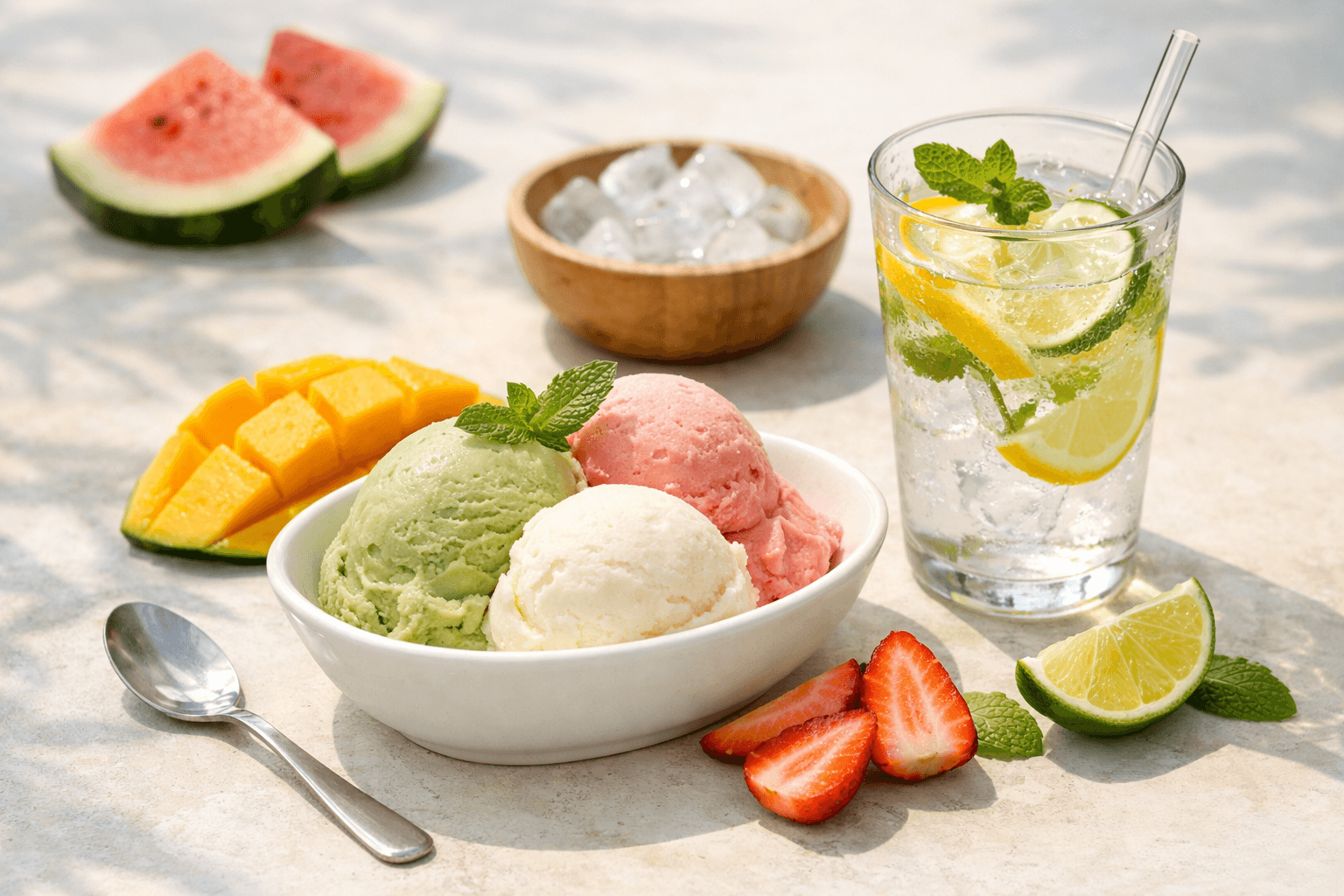
A serving of gelato on a hot day can easily become too heavy when every ingredient is trying to grab attention: two or three sweet flavours, biscuits, sauce and then another crunchy topping. When choosing a summer-friendly Gelato dish, the important consideration is not how many items can be added, but what role each ingredient is playing.
An easy framework to remember is one main gelato flavour, one contrasting element and one small accent. The main flavour sets the direction of the dish; the contrasting element adds acidity, mildness or texture; the accent simply completes the serving. This framework can be used when ordering at a shop, preparing dessert at home or developing a new dish for a summer menu.
What makes a serving of gelato easy to enjoy on a hot day?
“Refreshing” does not mean that every ingredient has to be sour. A distinctly acidic flavour can still become sharp when paired with fruit that is also acidic. Conversely, sweet or creamy gelato can still be easy to eat if the portion is compact and the accompanying ingredients provide the palate with a moment of respite.
Rather than looking for a fixed list of flavour pairings, you can consider the serving along three dimensions: sweetness, flavour intensity and texture. If the gelato is already sweet and intense, the accompanying items should be simple. If the whole serving is soft, a little crunch can create contrast. There is no need to push all three dimensions at once.
What are the three questions to ask before ordering?
- How sweet or intense is the main gelato flavour? If the flavour is already prominent, the fruit, biscuit and sauce should take a back seat and act as a supporting element.
- What is the serving lacking? The answer may be a little acidity, juiciness, mildness or a crunchy texture.
- Is the gelato a dessert after a meal or a dish to enjoy on its own? After a main meal, a small serving is usually more appropriate. If it is eaten between meals, you can add fruit or a small piece of cake.
If you need to distinguish the naming and characteristics of different product ranges before pairing them, you can read more in the Gelato knowledge section on Baby Boss.
Four summer-friendly Gelato pairing approaches
Gelato and fruit: look for contrast rather than increasing the quantity
Fruit can add acidity, juiciness or crunch, but it is not necessary to use several types in the same serving. With gelato that has a distinctly sweet or creamy character, you can start with a fruit that is more acidic or refreshing. If the gelato already has a prominent acidic note, milder fruit will help make the dish less sharp.
The presentation also affects the way it is enjoyed. Placing the fruit beside the gelato rather than covering the top completely allows the diner to taste each component separately before combining them. This makes it possible to adjust the proportions to suit personal taste rather than immediately getting a spoonful containing every flavour.
Gelato and light cake: let the cake provide the base
The cake does not have to be elaborate. A small piece with little topping and not too much sweet filling is usually easier to pair than a cake with lots of cream or thick sauce. In this structure, the cake adds sponginess or crunch; the gelato remains the main element.
If the cake has a clearly acidic flavour, such as a fruit tart, you may wish to consider a milder gelato. If the cake leans sweet, gelato with an acidic note or a fruity flavour can provide a counterbalance. This is a sensory direction, not a mandatory pairing.

Gelato and cold drinks: do not repeat the sweetness
A sweet serving of gelato accompanied by a sweet drink can quickly tire the palate. Cool plain water is a neutral choice that creates a clear pause between spoonfuls. If you choose a flavoured drink, its flavour and sweetness should be lighter than those of the main gelato.
For F&B shops, drink pairing should start with the signature gelato. Identifying in advance whether the gelato is sweet, acidic or intensely flavoured will help you choose a drink with a clearer role. Shop owners can also refer to the mixology guides to develop a serving approach that suits the menu.
Two gelato flavours: one main flavour, one supporting flavour
When using two flavours, neither should be overly sweet, overly intense or have a strong aftertaste. One flavour takes the central role; the other adds acidity, mildness or another layer of flavour.
Assigning primary and supporting roles is a way of organising flavours, not a mandatory rule. If you are unsure whether two flavours work together, choose a small portion and taste them separately before mixing. This is more practical than deciding based only on their names.
How should you choose a dish for different occasions?
| Occasion | Flavour selection | Accompanying ingredients | Best avoided |
|---|---|---|---|
| Dessert after a main meal | Distinct flavour, compact portion | A little fruit or nothing extra | Layered cakes, thick sauces and multiple toppings |
| Between-meal snack | One main flavour with moderate sweetness | Fruit or a small piece of cake | Combining several sweet items at once |
| Sharing with friends | Two flavours with different intensities | Serve the accompanying items separately | Mixing everything before tasting |
| Served at a shop | An easily recognisable signature flavour | One consistent accent | Decoration obscuring the main product |
This article was published on the Baby Boss channel. When you want to apply the pairing suggestions above to a specific product, you can view the Baby Boss Gelato catalogue, then compare each option according to three criteria: what the main flavour is, what contrasting element the dish needs and what the expected portion size is. The catalogue provides product references; the final pairing should still be based on taste preferences and the purpose of serving.
How to build a balanced gelato serving
- Identify the occasion: after a meal, as a snack or shared with others.
- Choose one main flavour: taste it and identify whether it is sweet, sour, mild or intensely flavoured.
- Add one contrasting element: choose fruit, a light pastry or a second gelato flavour; there is no need to use all three.
- Keep the accent small: crunchy ingredients and decoration should only support the main dish.
- Taste before adding sauce: if the dish is already sweet and flavoursome enough, you can leave out the sauce.
- Prepare the accompaniments first: have the bowl, spoon, fruit, pastry and drink ready before taking out the gelato.
For those developing a menu for sale, a consistent dish structure also makes service easier to repeat. Baby Boss has a page offering advice on setting up a Gelato business model for enquiries about the model, equipment and implementation process.
What mistakes can make a gelato serving taste too heavy?
Too many ingredients all taking centre stage
Gelato, pastry, sauce and fruit can all be delicious on their own, but not every ingredient needs to stand out at the same time. If you cannot clearly say what sourness, texture or aroma an ingredient is adding to a dish, it may be the element to leave out.
Pairing flavours by name without tasting
Even products with the same flavour name can differ in sweetness, sourness and intensity. The name should only be the starting point. Before adding pastry, fruit or a second gelato flavour, taste the main ingredient.
Using sauce as a default step
Sauce can enhance flavour and sweetness, but not every gelato serving needs it. If the main flavour is already intense and the accompanying pastry is also sweet, adding sauce often makes the boundaries between the flavours less distinct.

Taking the gelato out too early
If you take out the gelato before cutting the fruit, finding a spoon or pouring a drink, the dish will have to wait outside a cold environment. A more suitable order is to complete all the accompaniments first, take out the gelato last and serve it immediately.
Keeping gelato cold during transport and serving
According to the FDA food storage guidelines, keeping food at a suitably cold temperature is one of the best ways to prevent or slow the growth of bacteria.
- Place products that need to be kept cold in the refrigerator or freezer as soon as possible.
- Do not overfill the appliance, as air needs space to circulate.
- Check and follow the storage instructions on the product label.
- Use a lidded container or a suitable sealed bag to store food.
- If the product has not been kept cold correctly or shows any signs of concern, the safe choice is not to continue using it.
The FDA provides reference temperatures for appliances: refrigerators at no more than 4°C and freezers at −18°C. This is general guidance on food storage. For each gelato product, priority should be given to the conditions stated on the label and the manufacturer's instructions.
Frequently asked questions about summer gelato dishes
Which fruit should summer gelato be served with?
There is no single required option. Sweet or creamy gelato can go well with fruit that is tangy or refreshing; gelato with a pronounced sourness should be paired with milder fruit. It is best to start with one type so that the balance is easier to control.
Should you order three gelato flavours in the same serving?
You can, but three flavours that are all sweet or all intense can easily compete with one another. A simpler approach is to choose one main flavour and one supporting flavour with a clear role. If you want to try several flavours, use small portions and taste them separately.
How far in advance should you take out the gelato?
A single time period should not be applied to every product. Prepare the bowl, spoon and accompaniments first, take out the gelato last, serve it immediately and follow the instructions on the label.
A simple rule for your next order
Instead of asking “what could I add to make it fuller?”, ask “what is the dish missing?”. If the gelato is already intense, add something mild. If the dish is already sweet, look for a little sourness or leave out the sauce. If the entire texture is soft, all you need is a small crunchy element.
A gelato serving for a hot day does not need to be elaborate. One main flavour, one contrast and one accent is a clear enough framework to keep the dish focused while still leaving room for personal preference.
References
Join Baby Boss
Explore products and Baby Boss services, or call 1900998880.
Shopee · TikTok · Instagram · Threads · YouTube · LinkedIn · Zalo OA · Pinterest
Comments