
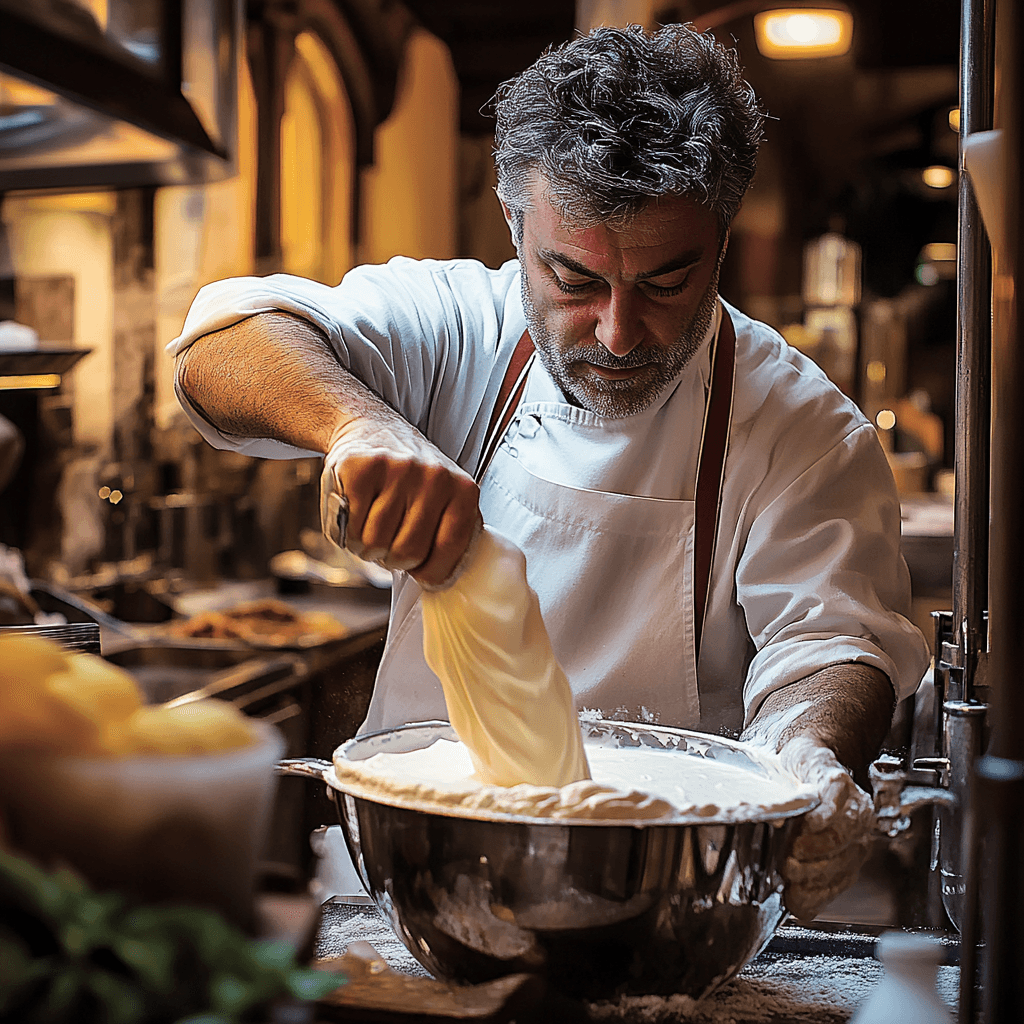
Making Gelato is quite an interesting but equally demanding profession. Only those in the trade can fully understand its ups and downs…
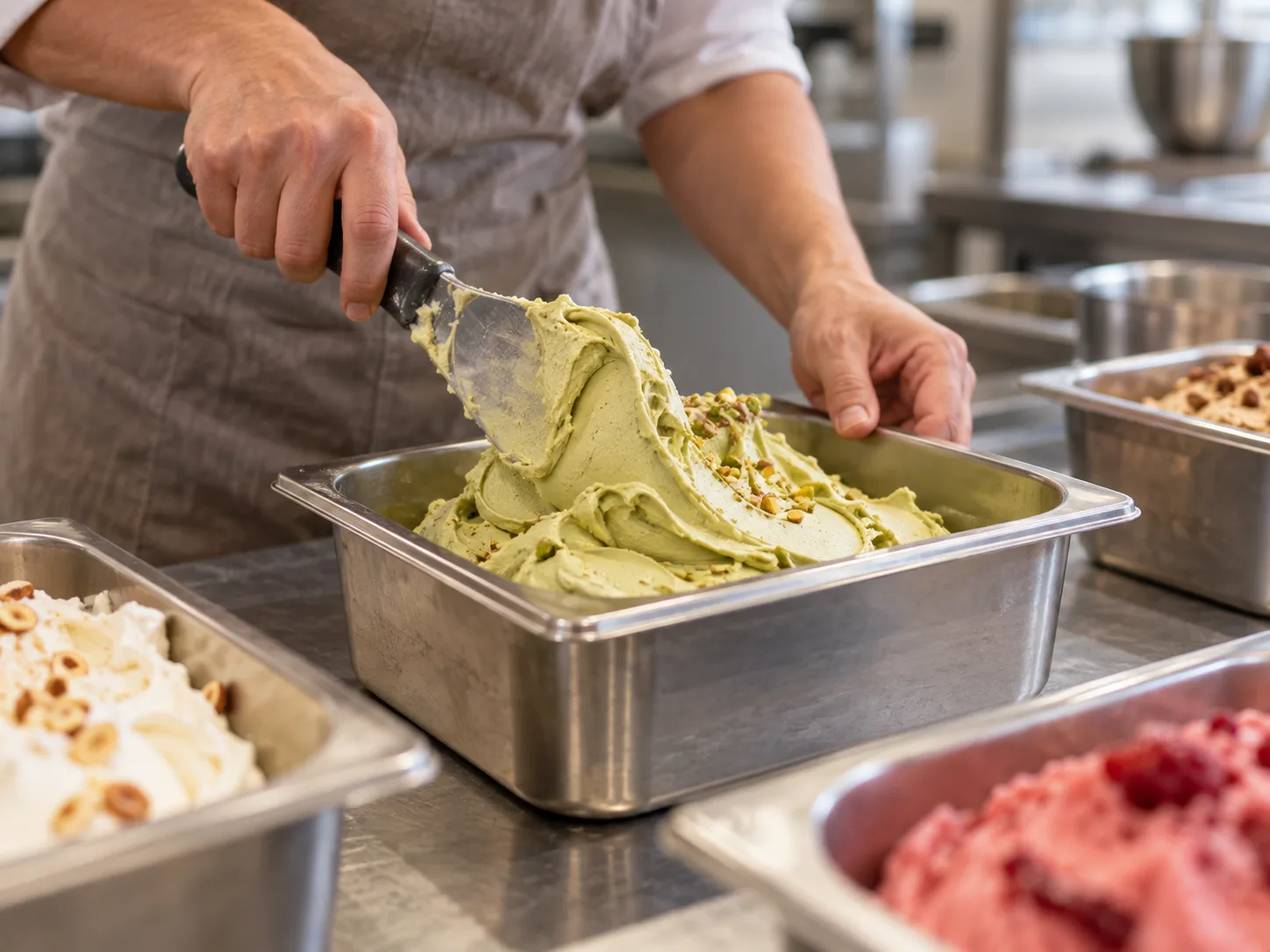
Calling Gelato ice cream is familiar, but to Italians, gelato is not ice cream because it contains no water, so it does not freeze solid and become icy cold like ordinary ice cream.
Gelato is originally a speciality of Italy. Wherever Italians go, they will eat ice cream, only to shake their heads afterwards because only in Italy Gelato is truly Gelato, and the most delicious and affordable.
Making gelato is quite an interesting profession. I feel that I was “meant to be” in it when I met my husband, who sells ice cream, and discovered that his father makes ice cream too—the whole family makes ice cream.
Our family has an ice cream shop in the Liguria coastal region of Italy and a mobile ice cream van in northern Germany. In Italy, the shop is open from mid-March to the end of October, depending on the weather each year. In Germany, we sell ice cream from April to the end of September because it is colder there.
The peak season in Germany is April, May and June, while in Italy it is July, August and September, as this is the summer holiday period, so Germans often go on holiday to Mediterranean countries, most commonly Italy.
There are many schools in Italy that specialise exclusively in gelato. It may sound simple—just learn the recipe, pour it into the machine, press the button and let it run—but in reality, it is nothing like that. An authentic Italian gelato machine is very expensive, costing on average from 30.000-50.000 euros depending on its capacity.
Authentic Gelato is made only from clean, naturally sourced ingredients, with no preservatives, additives or chemicals. In particular, most of the flavours in gelato
are created from fresh fruit. This means that the flavour and colour of gelato always feel real and natural, rather than delivering the perfect flavour produced by artificial chemical flavourings in ordinary ice cream.
Eatinggelato , you do not get the icy sensation of ice cream; instead, there is a coolness that gradually melts away, gentle and soothing. Gelato
is even less like other types of ice cream because it has a highly dense, smooth texture and a fat content of only 0-8%.
To successfully make authentic gelato , the maker must carefully calculate the balance of sweetness and fat, without using any artificial stabilisers, to preserve the soft, smooth texture of the ice cream. Using even slightly more than necessary will cause the ice cream to freeze solid or melt easily. If a scoop of gelato contains ice crystals, it means that the
gelato
Gelato
can be stored for a maximum of 10 days at temperatures from -12 to -15 degrees C, while ordinary ice cream must be kept at -23 degrees C and can therefore be stored for an entire year.
Although my husband’s family has a father who makes ice cream, he still had to go to Rome to study the craft for 1 month and learn the basic techniques. As my father-in-law has been making it for many years, he can tell from simply looking or tasting whether the texture and consistency are suitable, so it is very difficult for him to pass on his knowledge. In practice, the temperature must be checked every day to adjust the freezer temperature appropriately: if it is too cold, the gelato will freeze, while if it is too warm, it will melt. On rainy days, when humidity is high, care must be taken to prevent moisture in the air from forming ice, otherwise gelato That is why in Italy it is also called an art form.
The craft of making gelato during the peak season is truly gruelling and exhausting. My 70-year-old father, for example, works every day from 8am until 2am the following morning, only going home to rest for about an hour to recover.
During the season, when the shop is busy, it is even more exhausting because it is hot and there is no air conditioning, as the shop has been designed as an open space. At times like that, everyone comes home completely drained and exhausted, making it easy to lose one's temper. Not to mention watching other people enjoying themselves in bikinis by the sea while you have to stand continuously behind the counter, working in the sweltering heat—it is really not pleasant at all.
I remember one time when the shop was so busy and short-staffed that everyone was exhausted. Then an order was mixed up and the customer complained, making things even worse. In the end, everyone had to close the shop early to “sort out the chaos” inside first.
|
|
|
People in the trade must check the temperature every day to adjust the freezer temperature appropriately; if it is too cold, the gelato will freeze, while if it is too warm, it will melt - Photo: NVCC |

The craft of making gelato is most heavily dependent on the weather. If it is too hot, customers mainly go swimming in the sea or relax by the pool, while when the weather is cold and rainy, no one eats it either. So there are seasons when you can earn money, and seasons when you only make enough to cover the costs.
When you think about it, seasonal work is no different from working all year round because you work continuously. There are no public holidays, Saturdays or Sundays off like office workers have, nor are there 8-hour working days; on busy days, you usually work until the last customer has left before closing. So even when they are ill or exhausted, people in the trade have to push through and wait until winter to get a rest.
But the most enjoyable thing about this work is having time in winter to wander around and enjoy yourself, making up for the hard-working days. My parents travel to one country, my siblings and their children go skiing, while my wife and I usually wander around Southeast Asia and return to Vietnam for Tết… The whole extended family escapes the cold for the entire winter, then comes back to continue working for the gelato season.
My husband's home region is by the sea, so almost everyone there works seasonally like this. When the season ends, the first question people always ask one another is: Where are you planning to go on holiday this year?
Every profession is a matter of fate; I think the profession chooses the person, rather than the person choosing the profession. Nothing is simple or easy, but watching people who love their work is truly fascinating and compelling. So we simply carry on enjoying ourselves and doing our best with this calling.
Comments