
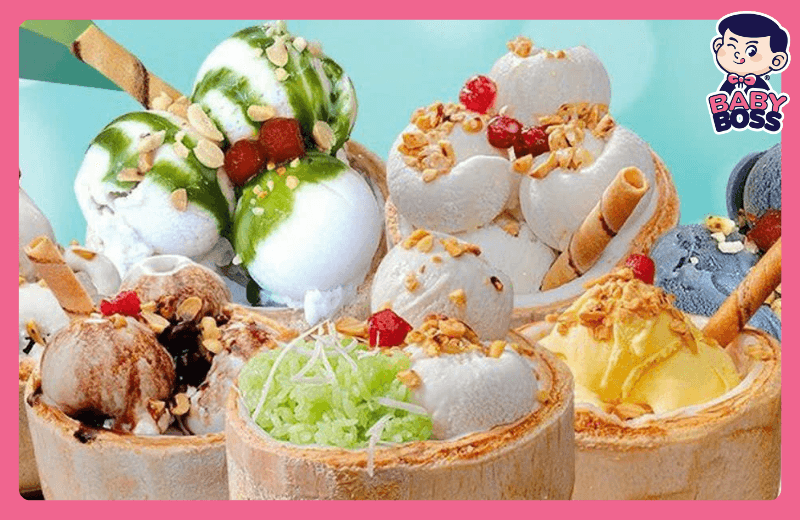
A Sweet Family Competition: Gelato and Ice Cream
A little friendly competition tends to exist in all families – sibling rivalry is the most famous example. However, cousins are also known to bring out the best in each other, and in the frozen dessert industry, the most recognised popularity contest takes place between American ice cream and its Italian cousin - Gelato.

Gelato enters America and continues to grow
Since the late 1700s, when Gelato was first introduced to America, Italy’s celebrated frozen treat has steadily gained ground among discerning consumers in the United States for its overall flavour, taste, texture, creaminess, consistency and artisanal presentation. However, although American palates may be accepting, many people remain loyal to ice cream, the sweet, creamy, frozen treat that continues to captivate the senses of the masses.
But despite the two cousins’ appealing flavours, culinary versatility and broad general appeal, the differences in "ingredients" between Gelato and ice cream vary only slightly, particularly when considering two important components – cream and air.
Ice Cream
Traditionally, both Gelato and American ice cream contain cream, milk, sugar, flavourings, emulsifiers and stabilisers. However, ice cream requires more cream, and some varieties use egg yolks. Meanwhile, Gelato contains more milk than cream, and the use of egg yolks is very rare. Furthermore, the butterfat content also differs. Because ice cream uses more cream, its butterfat percentage can range from 10 to 25 per cent, compared with Gelato, which ranges from just 4 to 9 per cent butterfat.

Air
Overrun, the process of incorporating air into the ice cream and Gelatomixture, plays a major role in the differences in texture and mouthfeel between these two frozen treats. Gelato contains much less air (30-35%) when mixed than traditional American ice cream (50-100%), making it a denser and therefore creamier product, despite having a lower cream content or lower butterfat percentage.
Production & Style
Production and presentation are also distinguishing factors between Gelato and ice cream. Although ice cream is very appealing, it is much less formal in presentation than authentic Italian Gelato. Ice cream is usually produced in large batches, stored in deep tubs, served in delicious, firm scoops on a cone or in a cup, and eaten with an ordinary plastic spoon. To add to its appeal, ice cream may be finished with chocolate sauce or fruit flavouring, whipped cream and topped with a stemmed maraschino cherry.
Its younger cousin, Gelato, has a more artistic and glamorous presentation, usually in 5-litre metal pans displayed in a glass cabinet. Produced in small batches throughout the day to ensure maximum freshness, Gelato is removed from the freezer in batches and placed in wave-like structures, shaped into mounds or completely levelled so that the surface of the Gelato is flush with the top of the pan. True to its Italian origins, gelato mountains are often beautifully decorated in a fine-dining style, covered in enticing sauces, adorned with artistically trimmed fresh fruit, sprinkled with ingredients that actually create the flavour in the gelato pan, such as chocolate-hazelnut, or marbled with a delicious ingredient. In addition, Gelato is no stranger to more unusual flavours, such as olive oil, tomato/basil or gorgonzola cheese.

As a rule, authentic Gelato is served with a spade rather than a scoop, allowing this Italian treat to be placed in a wafer, cup or dish, and eaten with a small tasting spoon.
Innovation
Today, like soft-serve ice cream, Gelato is served from a soft-serve machine, giving consumers the opportunity to enjoy authentic Gelato that is always fresh (always fresh) with every pull of the lever. This style of Gelato is also an excellent option for dessert makers looking for alternative uses for their soft-serve machines beyond frozen yoghurt. Gelato soft serve and sorbetto have a one-day shelf life for optimum freshness, but are equally dense in texture and just as full-flavoured because they are served at a warmer temperature than ice cream.

Shelf Life
Regarding the general shelf life of Gelato, the maximum shelf life is 4-5 days. In addition, this shelf life only applies when Gelato is kept in a display cabinet. If made in advance, covered and stored in a standard freezer, Gelato will keep for several months, like ice cream, which can be kept for up to 3 months in an unopened container in the freezer; an opened tub of ice cream can keep for up to 2 months.
Despite the many similarities and differences, Gelato and ice cream remains a cornerstone of the frozen dessert industry and continues to be loved by consumers around the world. Whether served traditionally or as soft serve, the right ingredients can turn premium ice cream and artisanal Gelato into an unforgettable experience for dessert lovers worldwide. This is truly a family rivalry that dessert consumers are happy to encourage.

Gelato is more than just a dessert; it embodies freshness, sophistication and passion in every spoonful. The next time you visit a gelateria, remember to stop and treat yourself to a cup of Gelato – to experience the difference and grow even fonder of Italy’s beautiful cuisine.
Visit Baby Boss to enjoy Gelato made to Italian standards in the heart of Vietnam, with more than 32 different fresh fruit flavours!
Hotline: 1900 99 88 80
Website: babyboss.com.vn
Article based on references from: pregelamerica.com
Comments