
Nutritional Information and Health Benefits of Gelato
Although you cannot get to Italy immediately, you can enjoy one of the pleasures of an Italian holiday almost any time Gelato! This rich dairy treat is widely sold in grocery shops and dessert shops in the United States. Made from cream, milk and sugar, Gelato can have any flavour, from fruit flavours to chocolate to plain (and delicious) vanilla.
You may have heard Gelato praised for having a lower fat content than ice cream. And generally speaking, you can expect it to have slightly fewer calories and less fat than traditional American ice cream, as its recipe calls for more milk and less cream. Because Gelato is not whipped as quickly as ice cream, it also contains less air, so it is usually denser and creamier.

Although it has fewer calories, its high sugar content means that gelato is a treat to be enjoyed in moderation. However, it still offers some notable benefits. Here is a look at the nutrition and health effects of Italy’s famous dessert.
Nutritional information about Gelato
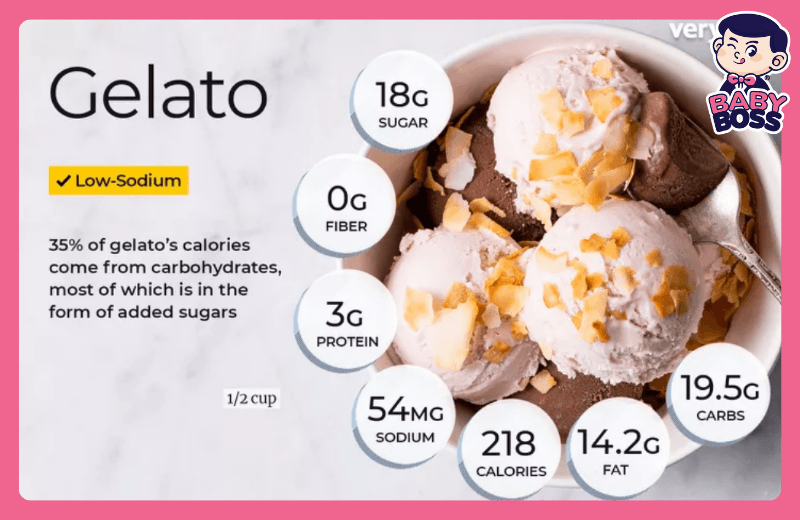
The following nutritional values, for ½ cup (88 gram) of Gelato vanilla, have been provided by the USDA
- Calories: 218
- Fat: 14,2g
- Sodium: 54mg
- Carbohydrates: 19,5g
- Fibre: 0g
- Sugar: 18g
- Protein: 3g
- Calcium: 103mg (10% RDI)
Carbohydrates
Approximately 35% of the calories in Gelato come from carbohydrates, most of which are in the form of added sugar. The remaining carbohydrates come from the lactose found in milk and cream.
Fat
Although Gelato may contain less fat than ice cream, it is certainly not lacking in this macronutrient. The combination of heavy cream and cow’s milk, sometimes along with egg yolks, provides up to 14,2 grams of fat per half cup. Remember that the more cream used in the recipe, the higher the saturated fat content.
Protein
Half a cup of Gelato contains approximately 3 grams of protein - 6% of the daily value of 50 grams. As this protein comes from animal products (milk, cream and eggs), it provides all the essential amino acids that your body cannot produce on its own.
Vitamins and minerals
The amount of vitamins and minerals in Gelato will partly depend on the added flavour. For example, fruit flavours such as orange and strawberry may increase the vitamin C content if real fruit is used in the recipe.
Even in plain vanilla, you will find a significant amount of an important micronutrient, calcium. Half a cup of vanilla gelato provides 103 milligrams of calcium, 9% of the recommended daily intake (RDI) for women and 10% for men.
Some recipes are also significant sources of vitamin A. To determine the exact amount of micronutrients in a tub of gelato, be sure to read the label carefully.
Health benefits
Gelato contains fewer calories than traditional ice cream but more calcium, which can help strengthen bones and teeth. And depending on what is added to Gelato, it may even contain antioxidants. Here is a closer look at the benefits of eating Gelato.
May be a better choice for weight loss
Because Gelato tends to contain fewer calories and less fat than regular ice cream, it may be a better dessert choice when you are trying to lose weight. Just remember that portion control is still very important.
Helps strengthen bones
With 10% RDI of calcium in a 1-cup serving, Gelato qualifies as a good source of this nutrient. Calcium helps strengthen bones.
May contain anti-inflammatory antioxidants
Just as the micronutrients in Gelato vary depending on the flavour, so does the antioxidant content. For example, dark chocolate-flavoured gelato may be a high-antioxidant choice.
Dark chocolate contains powerful antioxidants associated with reduced inflammation, which may help protect against heart disease. Meanwhile, citrus flavours contain antioxidant vitamin C, while blueberry Gelato contains high levels of the berry’s renowned polyphenols. However, it is important to remember that these antioxidants are provided in a food high in saturated fat and sugar - foods that have been linked to heart disease.
Promotes enjoying food
Gelato is usually served in small portions with a small spoon resembling a shovel. Besides being a novel way to eat frozen desserts, these visual cues can also help you eat Gelato more slowly, enjoying the experience as you eat. Research shows that savouring food and eating more slowly can enhance feelings of fullness from smaller portions.

Suitable for a high-fat diet
Sometimes, health conditions require a high-fat, high-calorie diet. People with cystic fibrosis, those undergoing chemotherapy or anyone trying to gain weight may be advised to include high-fat, calorie-dense foods in their diet. With a large proportion of its calories coming from fat, gelato deserves a place in this diet.
Similarly, people with egg allergies should be particularly careful when consuming Gelato, as some recipes contain egg yolks. When in doubt, ask the server about the ingredients in the gelato recipe. Or, if buying Gelato from a grocery shop, check the ingredients list carefully.
Side effects
A Gelato Stick can be a wonderful way to convey an Italian feel or celebrate a special occasion—but be careful not to have too much of a good thing. Almost all types of Gelato are very high in sugar. Excess sugar in the diet can lead to weight gain, contribute to tooth decay and even increase the risk of death from cardiovascular disease. 5
The high fat content in Gelato can also be harmful to health. Too much saturated fat in the diet can increase cholesterol, potentially raising the risk of heart disease and stroke. 6 Once again, it is best to enjoy Gelato only as an occasional treat.
Storage and Food Safety
Interestingly, Gelato is usually served at a warmer temperature (specifically, approximately 10 to 15 degrees warmer) than ice cream. What is the purpose behind this temperature difference? A warmer product causes less numbness in the mouth, allowing a fuller flavour experience.
However, this does not put the food from your Gelato shop in the temperature danger zone, where bacteria are more likely to grow. Most Gelato shops keep their serving temperature at around 10 to 22 degrees F.
When serving Gelato at home, you may want to let the tub thaw for slightly longer than usual to achieve a creamier texture and richer flavour—but do not leave the ice cream out of the freezer for too long. If gelato is left out for 2 hours at a temperature of 40 degrees F or above, it is best to discard it. When frozen, gelato has a shelf life of approximately 3 to 9 months.
Gelato – A dessert that is both delicious and wholesome

Gelato is not only a treat that satisfies the taste buds but also offers many surprising health benefits. With a variety of flavours, natural ingredients and a standardised preparation process, Gelato Baby Boss deserves to be the perfect choice for every occasion.
Let every spoonful of Gelato be not only a moment of indulgence but also a journey of health and joy. Contact Baby Boss today to discover unique Gelato flavours and experience the difference!
Click here for consultation and a free sample: https://kinhdoanhgelato.babyboss.com.vn
Hotline: 1900 99 88 80
Website: babyboss.com.vn
Tiktok
Instagram
Thread
Youtube
Linkin
Zalo OA
Article based on references from Verywellfit.com
Comments